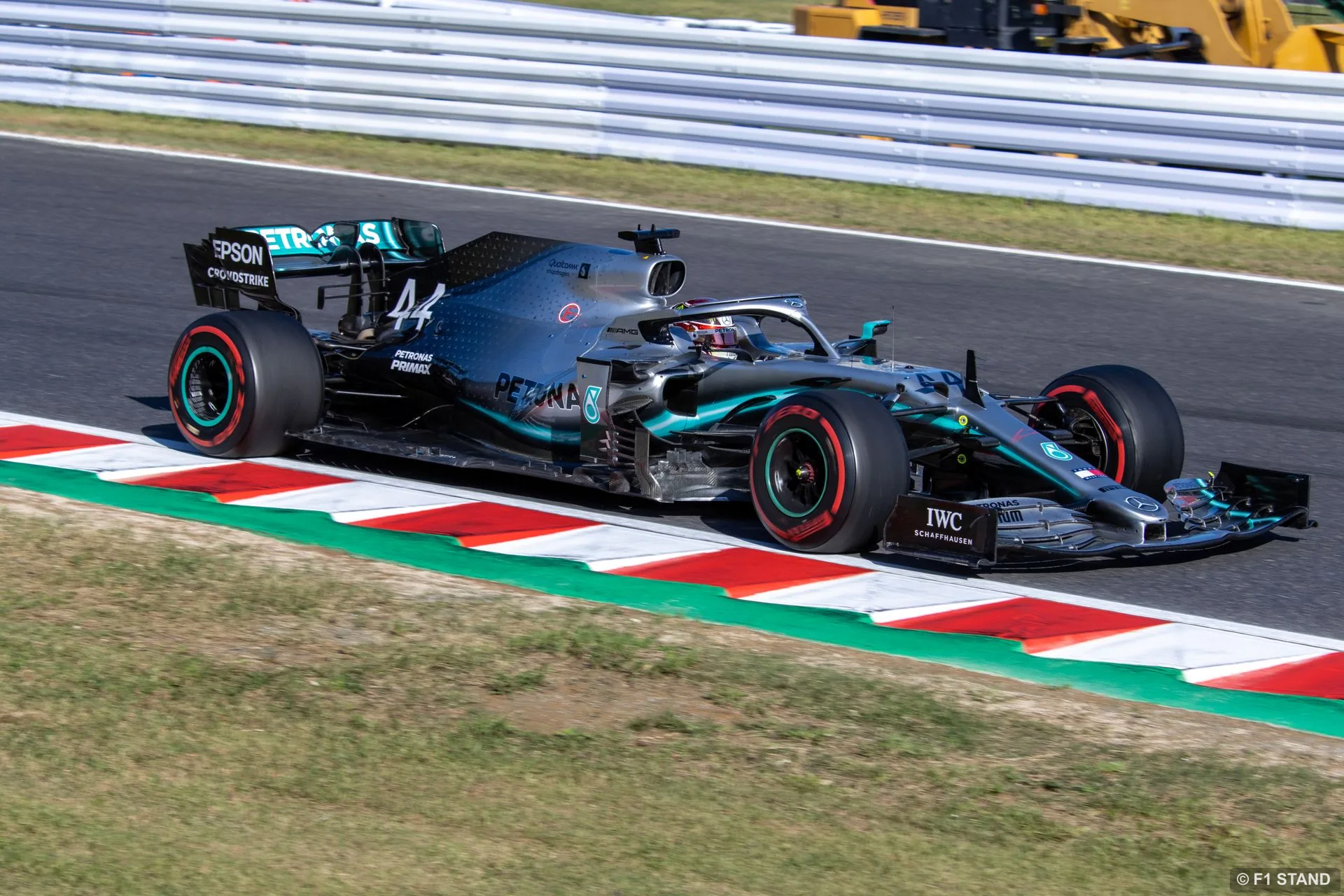
2025 Japanese Grand Prix F1 paddock photo
Glossary

F1 Glossary

Key Formula 1 terms grouped by category for race watching, news and analysis.

157
terms
11
categories

Organizations and systems

Terms related to organizations and systems that govern Formula 1

FIA
The international federation that governs motorsport, including F1.

FIA stands for Fédération Internationale de l’Automobile. In F1, it oversees sporting rules, technical regulations, safety standards, licences and stewarding.

Aliases

Fédération Internationale de l’Automobile
Constructor
The team or chassis-building entrant competing in F1.

F1 has a Constructors’ Championship separate from the Drivers’ Championship. In common usage, constructor often refers to the team entry.

Aliases

constructor team
Concorde Agreement
The key agreement governing F1’s commercial structure and team participation.

The Concorde Agreement sets out major commercial and participation terms between the governing body, commercial rights holder and teams. It is renewed periodically.

Related terms

Steward
An official who reviews incidents and decides penalties.

Stewards investigate incidents during a race weekend and can issue warnings, time penalties, grid penalties or disqualifications.

Liberty Media
The company group that owns F1’s commercial rights.

Liberty Media owns the commercial rights to Formula 1 and is heavily involved in promotion, media strategy and commercial development.

FOM
Formula One Management, involved in F1’s commercial operations and broadcast production.

FOM stands for Formula One Management. It is involved in F1’s commercial operations, broadcast production and promotion.

Aliases

Formula One Management
GPDA
The Grand Prix Drivers’ Association.

GPDA stands for Grand Prix Drivers’ Association. It represents drivers’ views on safety, racing conditions and related matters.

Aliases

Grand Prix Drivers’ Association

Related terms

Race director
The official responsible for managing race operations.

The race director oversees session control, flags, Safety Car procedures and race-control decisions.

Aliases

race control

Related terms

F1 Commission
A body that discusses F1 rules and governance matters.

The F1 Commission includes key stakeholders such as the FIA, commercial rights holder and teams, and discusses sporting, technical and operational matters.

Technical directive
An FIA instruction clarifying technical-rule interpretation or enforcement.

A technical directive is a document used by the FIA to clarify how technical regulations are interpreted, checked or enforced.

Aliases

TD

Related terms

Scrutineering
Technical checks to confirm a car complies with the regulations.

Scrutineering checks items such as weight, dimensions, parts, fuel and setup to ensure the car complies with technical rules.

Aliases

technical inspection
Points system
The structure that awards championship points by finishing position.

The points system determines how championship points are awarded to drivers and constructors for races or sprints. The scoring format has changed across eras.

Aliases

scoring system

Related terms

F1 TV
Formula 1’s official video streaming service.

F1 TV is Formula 1’s official streaming service. Depending on region and plan, it can include live coverage, onboard cameras, timing data and archive races.

Aliases

Formula 1 TV

Related terms

Simulator
A virtual testing environment used for driver practice and setup work.

A simulator recreates car and circuit behaviour to support driver preparation, setup development and strategy evaluation.

Aliases

driving simulator
Gardening leave
A contractual waiting period before a team member joins a rival team.

Gardening leave is a period where an employee, such as an engineer or senior team figure, is kept away from active work before joining another team. In F1, it is used to protect confidential information and is often mentioned in staff-transfer stories.

Aliases

garden leave
Motorhome
A team hospitality and operations base in the paddock.

A motorhome is a team’s paddock base at a Grand Prix. It is used for staff, drivers, guests, media duties, meals and meetings.

Aliases

team motorhomehospitality unit
Reserve driver
A backup driver who can replace a race driver if needed.

A reserve driver is on standby to replace a race driver who cannot take part due to illness, injury, suspension or other reasons. Depending on the team, they may also do simulator work, testing and FP1 sessions.

Aliases

backup driver
Team principal
The senior figure responsible for running an F1 team.

A team principal is responsible for the overall running of an F1 team, including sporting, commercial, staffing and public-facing matters.

Technical director
A senior technical leader responsible for car development direction.

A technical director oversees the technical direction of car development, including areas such as chassis, aerodynamics and mechanical design. Exact responsibilities vary by team.

Related terms

Test driver
A driver who supports testing and development work.

A test driver supports development through testing, simulator work, tyre tests or young-driver running. The role can overlap with reserve or development-driver duties.

Aliases

development driver
Paddock
The restricted circuit area containing team and media facilities.

The paddock is the restricted area at a circuit that contains team motorhomes, hospitality units, media areas and working spaces.

Related terms

Fan vote
A voting process where fans choose an outcome or award.

A fan vote is a process where viewers or spectators vote to decide an award or outcome. In F1 it is used for Driver of the Day.

Aliases

fan voting

Related terms

Triple Crown of Motorsport
The Monaco Grand Prix, Indianapolis 500 and 24 Hours of Le Mans.

The Triple Crown of Motorsport usually refers to winning the Monaco Grand Prix, the Indianapolis 500 and the 24 Hours of Le Mans. It spans F1, IndyCar-style oval racing and endurance racing, and is regarded as a major cross-discipline achievement.

Aliases

World’s three great races
Indianapolis 500
A historic 500-mile race held at Indianapolis Motor Speedway.

The Indianapolis 500 is a historic 500-mile race held at Indianapolis Motor Speedway. It is not an F1 race, but it is one leg of motorsport’s Triple Crown alongside Monaco and Le Mans.

Aliases

Indy 500
24 Hours of Le Mans
A historic 24-hour endurance race held in Le Mans, France.

The 24 Hours of Le Mans is a historic endurance race held in France. It is not an F1 race, but it is one leg of motorsport’s Triple Crown and tests speed, reliability, strategy and team execution.

Aliases

Le Mans
Endurance race
A long-distance race that tests speed and reliability.

An endurance race is a long-distance event that tests not only speed but also reliability, fuel use, tyre management, pit work and driver changes. Le Mans is the best-known example.

Aliases

endurance racing

Related terms

F2
The main feeder category directly below Formula 1.

F2 stands for the FIA Formula 2 Championship. It is a leading junior category for drivers aiming to reach F1, often racing on the same Grand Prix weekends. It gives drivers experience in tyre management, race strategy, feature races and sprints.

Aliases

Formula 2FIA Formula 2 Championship
F3
A junior single-seater category below F2.

F3 stands for the FIA Formula 3 Championship. It is a junior category for young drivers aiming to progress to F2 and eventually F1, often racing on the same weekends as F1 and F2.

Aliases

Formula 3FIA Formula 3 Championship
Junior category
A lower-level category where young drivers develop before reaching F1.

Junior categories allow young drivers to gain race experience, licence points and team evaluation before moving toward F1. F2, F3 and F1 Academy can be part of this pathway depending on context.

Aliases

feeder seriesfeeder category

Related terms

F1 Academy
A formula racing category focused on developing female drivers.

F1 Academy is a formula racing category focused on developing female drivers and supporting progression toward higher levels of motorsport, with links to the F1 ecosystem.

Sessions

F1 practice, qualifying, sprint and race sessions

Free practice
Practice sessions before competitive sessions.

Teams use practice to evaluate setup, tyres and race pace.

Aliases

FPFP1FP2FP3
Qualifying
The session that sets the starting order for the race.

Qualifying is usually run in Q1, Q2 and Q3 knockout segments.

Q1
The first segment of qualifying.

All cars take part and the slowest drivers are eliminated.

Q2
The second segment of qualifying.

Drivers who advanced from Q1 compete, with more eliminations.

Q3
The final segment of qualifying.

The fastest remaining drivers fight for the top grid positions.

Sprint
A shorter race format.

A sprint is a shorter race held at selected Grands Prix and can affect points or weekend order depending on the format.

Formation lap
The lap before the race start.

Drivers leave the grid, warm tyres and brakes, then return to their starting positions.

Race start
The moment the race begins.

Cars launch when the start lights go out.

Podium
The rostrum for the top three finishers in a race.

In F1, the top three finishers usually stand on the podium after the race for the trophy ceremony and celebrations. A podium finish means finishing in the top three.

Aliases

podium finishrostrum

Related terms

Front row
The first row of the starting grid.

The front row usually means grid positions 1 and 2 for the race start. Starting there gives a driver a major positional advantage.

Aliases

front-row start
Reconnaissance lap
A pre-race lap from the pit lane to the starting grid.

A reconnaissance lap is driven before the race start as cars leave the pit lane and head to the grid. It lets drivers check the car, track, brakes and tyres. It is different from the formation lap.

Aliases

recon lap

Related terms

Hat-trick
Taking pole position, the race win and fastest lap at the same Grand Prix.

In F1, a hat-trick means achieving pole position, winning the race and setting the fastest lap at the same Grand Prix.

Aliases

hat trick
Grand slam
Pole position, race win, fastest lap and leading every lap at the same Grand Prix.

In F1, a grand slam means taking pole, winning the race, setting the fastest lap and leading every lap. It is a rarer achievement than a hat-trick.

Aliases

grand chelem

Related terms

Pole position
The first starting position on the grid.

Pole position is the first place on the starting grid, usually awarded to the fastest driver in qualifying.

Aliases

polePP

Related terms

Pole-sitter
The driver who starts from pole position.

The pole-sitter is the driver awarded the first starting position on the grid.

Aliases

polesitter

Related terms

Lap leader
The driver leading a particular lap.

A lap leader is the driver recorded as leading a given lap. Leading every lap is part of an F1 grand slam.

Related terms

Shakedown
A short run to check a new, updated or repaired car.

A shakedown is a brief run used to confirm that a car’s systems, assembly and basic functions are working correctly before more serious running.

Aliases

systems check
Pole-to-win
Winning the race after starting from pole position.

Pole-to-win means the pole-sitter also wins the race. It does not require fastest lap or leading every lap.

Aliases

pole to win
Champagne fight
The podium celebration where drivers spray bottles after the race.

A champagne fight is the podium celebration where the top finishers spray bottles after the ceremony. Depending on location or sponsor, the drink may not literally be champagne.

Aliases

champagne spraypodium celebration

Related terms

Installation lap
A short check lap to confirm car systems are working.

An installation lap is used to check basic car systems, sensors, brakes and power-unit functions, often at the start of a session. It is not usually a push lap.

Aliases

systems check lap
Cool-down lap
A lap used to cool tyres, brakes and car systems.

A cool-down lap is driven after a push lap or at the end of a session to reduce temperatures in tyres, brakes and power-unit systems. In qualifying, it can help prepare for another push lap.

Aliases

cooldown lap
Driver of the Day
A fan-voted award for the most impressive driver of a race.

Driver of the Day is a fan-voted award for the driver considered most impressive in a race. The winner is not necessarily the race winner; comebacks, strong defence or standout battles can influence the vote. It does not directly award championship points.

Aliases

DOTD

Related terms

Grand Prix
An individual event on the F1 calendar.

A Grand Prix is an individual event on the F1 calendar. It usually includes multiple sessions such as practice, qualifying and the race, and is often named after a country or region.

Aliases

GP
Last lap
The final lap of a race or session.

The last lap is the final lap of a race or session. Position battles, fastest-lap attempts, fuel saving and tyre management can all matter until the end.

Aliases

final lap
Monaco Grand Prix
A historic F1 race held on the streets of Monaco.

The Monaco Grand Prix is one of F1’s most historic races, held on a street circuit in Monte Carlo. Overtaking is difficult, making qualifying position and precision especially important. It is also one leg of motorsport’s Triple Crown.

Race rules

Terms related to race control and sporting rules

Safety Car
A car that controls the field during unsafe track conditions.

The Safety Car neutralises the race and leads the field at reduced speed after incidents or dangerous conditions.

Aliases

SC

Related terms

Virtual Safety Car
A neutralisation system that requires drivers to follow a target delta.

VSC slows the field without deploying the physical Safety Car.

Aliases

VSC
Red flag
A red flag that stops the session.

A red flag stops a session when conditions are unsafe, such as after a serious accident, bad weather, barrier repairs or track clearing. Drivers must follow race-control instructions and usually return to the pit lane.

Aliases

red
Yellow flag
A yellow flag warning drivers of danger ahead.

A yellow flag warns drivers of danger on or near the track. Drivers must slow down in the affected sector and overtaking is generally prohibited. Single and double yellows indicate different levels of caution.

Aliases

yellow
Blue flag
A blue flag telling a driver that a faster car is approaching.

A blue flag tells a driver that a faster car is approaching. In races it is commonly shown to lapped cars, which must allow leaders or faster cars through safely.

Aliases

blue

Related terms

Track limits
The defined boundaries of the racing surface.

Drivers can be penalised or have lap times deleted if they gain an advantage by leaving the track.

Related terms

Parc fermé
A controlled condition where car changes are restricted.

After certain points in a race weekend, teams are limited in what they can change on the car.

107% rule
A qualifying rule based on being within 107% of the fastest Q1 time.

The 107% rule means a driver who fails to set a time within 107% of the fastest Q1 time may not be allowed to start the race, although stewards can grant permission in exceptional cases.

Aliases

107 percent rule

Related terms

Marshal
A trackside official responsible for safety tasks.

Marshals are essential trackside officials who handle flags, incident response, fire safety, debris removal and car recovery.

Aliases

track marshalofficial

Related terms

Pit lane
The speed-limited lane running past the team garages.

The pit lane is the lane used to enter and leave the pits, usually with a speed limit. It is central to pit stops, pit exits and unsafe-release decisions.

Debris
Fragments or foreign objects on the track.

Debris includes carbon fibre, metal or other objects left on track after contact or incidents. It can damage tyres and may trigger yellow flags, VSC or Safety Car periods.

Aliases

track debris
Weaving
Moving the car side to side to warm tyres or change positioning.

Weaving is side-to-side movement on track, often used during formation laps or Safety Car periods to warm tyres and brakes. Excessive weaving or defensive movement can be investigated.

Green flag
A green flag indicating the end of a hazard zone or normal racing conditions.

A green flag indicates that a hazard zone has ended or that normal racing conditions have resumed. It can be shown after yellow flags or Safety Car periods.

Aliases

green
Chequered flag
The black-and-white flag that marks the end of a race or session.

The chequered flag marks the end of a race or session. In a race, it is shown to the leader at the finish, after which cars are classified as they complete the line.

Aliases

checkered flagchequeredchecker

Related terms

Black flag
A black flag ordering a specific driver to return to the pits.

A black flag is shown with a car number and orders that driver to return to the pits. It can be used for serious infringements or unsafe conditions and may effectively mean disqualification.

Aliases

black

Related terms

Double yellow flag
Two yellow flags indicating a serious hazard.

Double yellow flags indicate a serious hazard on or near the track. Drivers must slow significantly and be prepared to stop or change direction.

Aliases

double yellows
Black-and-white flag
A warning flag for unsporting or questionable driving.

The black-and-white flag is a warning to a specific driver. It can be used for driving standards issues, repeated track-limits offences or conduct that may lead to a penalty if continued.

Aliases

black and white flag

Related terms

White flag
A white flag warning of a slow-moving vehicle ahead.

A white flag warns drivers that a slow-moving vehicle is ahead, such as a car with a problem or an intervention vehicle. Drivers must proceed with caution.

Aliases

white

Related terms

Backmarker
A slower car that is being lapped by the leaders.

A backmarker is a car being lapped by the leaders. Backmarkers can be shown blue flags and may become a traffic factor for faster cars.

Aliases

lapped car

Related terms

Strategy

Terms related to pit stops, position and race strategy

Undercut
Pitting earlier than a rival to gain track position.

A strategy where a driver pits before a rival, uses fresher tyres to set faster laps, and tries to jump ahead when the rival stops.

Related terms

Overcut
Staying out longer than a rival to gain track position.

A strategy where a driver delays the pit stop and tries to gain enough time before stopping.

Related terms

Pit window
The lap range where a pit stop becomes strategically viable.

The window is based on tyre life, gaps to rivals, traffic and race-neutralisation risk.

Out lap
The lap immediately after leaving the pits.

Drivers bring tyres up to temperature and try to set up a strong following lap.

Related terms

In lap
The lap on which a driver enters the pits.

The pace before pit entry can affect the success of a strategy.

Related terms

Stint
A run on one set of tyres.

A stint lasts from one pit stop to the next, or to the end of the race.

Two-stop strategy
A race strategy with two pit stops.

A two-stop strategy uses extra tyre changes to maximise pace over the race distance.

Stay out
A strategy call to remain on track instead of pitting.

To stay out means not pitting and continuing on track. It is often chosen based on Safety Car timing, weather, tyre life or track position.

DRS train
A line of cars running within DRS range of each other.

A DRS train is a line of cars where several drivers are within one second of the car ahead. Because each car can also use DRS, it can be difficult for cars further back to create enough speed difference to overtake.

Related terms

Tyres

Terms related to tyre compounds and usage

Soft tyre
A dry tyre compound with high grip and higher wear.

Soft tyres are usually faster over one lap but tend to degrade sooner.

Aliases

Soft compound

Related terms

Medium tyre
A balanced dry tyre compound.

Medium tyres sit between soft and hard compounds in grip and durability.

Aliases

Medium compound
Hard tyre
A durable dry tyre compound with lower grip.

Hard tyres are suited to longer stints but are usually slower to warm up.

Aliases

Hard compound
Intermediate tyre
A grooved tyre for light rain or drying conditions.

Intermediates are used between full wet and dry tyre conditions.

Aliases

Inter
Wet tyre
A grooved tyre for heavy rain and standing water.

Full wets disperse more water than intermediates and are used in very wet conditions.

Aliases

Full wet
Tyre degradation
The loss of tyre performance over a stint.

Degradation causes grip loss and slower lap times due to wear or thermal effects.

Aliases

Deg
Graining
A tyre surface condition that reduces grip.

Graining occurs when the tyre surface tears into small grains, often from sliding or poor temperature range.

Related terms

Blistering
Tyre damage caused by overheating.

Blistering happens when excessive heat damages the tyre surface and reduces performance.

Related terms

Flat spot
A flattened patch on a tyre caused by sliding or locking up.

A flat spot often happens after a lock-up, creating vibration and reducing grip. Severe flat spots can force a tyre change.

Aliases

flatspotflat-spotting
Slow puncture
A gradual loss of tyre pressure.

A slow puncture is a gradual loss of air pressure rather than an immediate tyre failure. It can reduce pace and handling and may develop into a larger puncture.

Related terms

Lock-up
A braking event where a tyre stops rotating and slides.

A lock-up happens when a tyre stops rotating under braking and slides across the track. It can cause flat spots and compromise corner entry.

Aliases

brake lock-up

Related terms

Puncture
A tyre failure or loss of air pressure.

A puncture is tyre damage that causes pressure loss. It can be caused by debris, contact, kerbs or wear and may require an immediate pit stop.

Aliases

tyre puncture

Car parts

Parts and systems of an F1 car

DRS
An overtaking aid that opens the rear wing to increase straight-line speed.

DRS stands for Drag Reduction System. It reduces drag in designated zones by opening part of the rear wing.

Aliases

Drag Reduction System

Related terms

ERS
A system that recovers energy and deploys it for extra power.

ERS stands for Energy Recovery System. It stores recovered energy and deploys it as electrical power.

Aliases

Energy Recovery System
Halo
A cockpit protection device around the driver’s head.

The Halo is a safety structure designed to protect the driver from impacts and debris.

Power unit
The complete propulsion system of an F1 car.

The power unit includes the internal combustion engine and hybrid energy recovery components.

Aliases

PU
Gearbox
The transmission that sends power to the driven wheels.

The gearbox allows the car to use different gear ratios for different speeds.

Floor
The aerodynamic bodywork under the car.

The floor is a key component for generating ground-effect downforce.

Car number
The number displayed on a driver’s car. Modern F1 uses a permanent-number system.

A car number identifies the driver on track. In modern F1, drivers generally choose a permanent number and keep it through their career, although the reigning champion may choose to use number 1 the following season. Before the permanent-number system, numbers were often assigned according to factors such as the previous year’s team standings or entry order, so they were not fixed personal driver numbers in the modern sense.

Aliases

driver numberrace numberpermanent number

Related terms

Monocoque
The central survival structure of an F1 car.

The monocoque is the core safety cell around the driver. It protects the survival space and serves as a structural mounting point for major components.

Aliases

survival cellchassis tub

Related terms

Steering wheel
The driver control interface used for steering and many car settings.

An F1 steering wheel is not just for steering. It integrates gearshift paddles, radio controls, energy settings, brake balance, differential settings and display information.

Related terms

MGU-K
The hybrid unit that recovers kinetic energy under braking and deploys it for acceleration.

MGU-K stands for Motor Generator Unit-Kinetic. It recovers kinetic energy during braking and can deploy electrical power back to the drivetrain for acceleration.

Aliases

Motor Generator Unit-Kinetic
ICE
The internal combustion engine part of an F1 power unit.

ICE stands for Internal Combustion Engine. It is the combustion engine within the F1 power unit and works with hybrid systems such as the MGU-K and turbocharger.

Aliases

Internal Combustion Engineengine
MGU-H
The hybrid unit connected to the turbocharger to manage heat energy.

MGU-H stands for Motor Generator Unit-Heat. It is linked to the turbocharger and can recover energy from exhaust-driven rotation or help control turbo speed.

Aliases

Motor Generator Unit-Heat
Turbocharger
A device that uses exhaust energy to compress intake air and increase engine power.

A turbocharger uses exhaust energy to spin a turbine and compress intake air, increasing ICE output. In F1 hybrid power units it is closely linked with the MGU-H.

Aliases

turbo

Related terms

Energy Store
The battery system that stores recovered electrical energy.

The Energy Store is the battery element of the F1 power unit. It stores recovered electrical energy and supplies it for deployment.

Aliases

ESbattery

Related terms

Control Electronics
The electronic control unit for the power-unit systems.

Control Electronics manage and control parts of the power unit and hybrid systems. They are one of the regulated power-unit elements in F1.

Aliases

CE

Related terms

Dyno
A test bench used to run and measure an engine or power unit outside the car.

A dyno is used to test output, reliability, cooling and control behaviour of an engine or power unit before or alongside track running.

Aliases

dynamometerbench test

Related terms

Formula car
A single-seat open-wheel racing car built to a defined formula.

A formula car is a single-seat racing car built to a set of technical regulations, usually with exposed wheels. F1, F2 and F3 cars are all examples of formula cars.

Aliases

single-seateropen-wheel carformula racing car

Related terms

Single-seater
A racing car designed for one driver.

A single-seater is a racing car designed for one driver. Formula cars such as F1 cars are a major example, distinct from sports cars or touring cars.

Aliases

single seater

Aerodynamics

Terms related to airflow and downforce

Dirty air
Turbulent air from a car ahead.

Dirty air reduces aerodynamic efficiency for the following car and can make cornering and tyre management harder.

Aliases

turbulent air
Slipstream
Reduced drag behind another car.

A following car can gain straight-line speed by running in the wake of the car ahead.

Aliases

Tow
Downforce
Aerodynamic force that pushes the car onto the track.

Downforce improves cornering grip but can increase drag.

Drag
Aerodynamic resistance.

Drag slows the car on straights and is closely related to aerodynamic setup and DRS.

Porpoising
A bouncing motion caused by aerodynamic effects.

Porpoising is a repeated vertical oscillation often associated with ground-effect aerodynamics.

Clean air
Undisturbed air with little aerodynamic turbulence from cars ahead.

Clean air gives a car more stable aerodynamic performance and usually helps pace and tyre management compared with following in dirty air.

Related terms

Wind tunnel
A test facility used to measure aerodynamic performance with controlled airflow.

A wind tunnel lets teams test scale models or components in controlled airflow to measure downforce, drag and flow behaviour. In F1, wind-tunnel use is an important but regulated part of aerodynamic development.

Aliases

wind-tunnel testing

Related terms

ADUO
A regulation term referring to Additional Development and Upgrade Opportunities.

ADUO is used as an abbreviation for Additional Development and Upgrade Opportunities. It is associated with aerodynamic testing restrictions and regulation-transition development allowances, where extra development or upgrade opportunities may be available under defined conditions. It is more of a technical-regulation term than a common race-broadcast phrase.

Aliases

Additional Development and Upgrade Opportunities
Aerodynamic Testing Restrictions
Rules that limit wind-tunnel and CFD aerodynamic development work.

Aerodynamic Testing Restrictions limit development tools such as wind-tunnel running and CFD work. In modern F1, allowances can vary based on factors such as championship position to support cost control and competitive balance. They provide the context for concepts such as ADUO.

Aliases

ATR
Tail-to-nose
A situation where two cars run very close together.

Tail-to-nose describes cars running extremely close, with the following car’s nose near the rear of the car ahead. It is common during battles or within DRS range and is affected by slipstream and dirty air.

Aliases

nose-to-tailnose to tail
F-duct
An aerodynamic system, famous in 2010, used to reduce drag on straights.

The F-duct was an aerodynamic device made famous in the 2010 season. It altered airflow, often via driver input, to reduce rear-wing effectiveness and drag on straights. Similar manually operated systems were later restricted.

Aliases

F duct

Related terms

Tow
The straight-line speed gain from following another car.

A tow is similar to slipstream: the following car benefits from reduced drag behind another car and can gain speed on straights. Drivers may deliberately seek a tow in qualifying.

Aliases

slipstream

Related terms

Circuit

Terms related to circuit layout and track features

Chicane
A sequence of corners designed to slow cars down.

A chicane usually requires a quick left-right or right-left change of direction and is often used to reduce speed after fast sections.

Related terms

Gravel
Loose stones placed in an off-track run-off area.

Gravel traps help slow cars that leave the track, but cars can get stuck or pick up stones that affect tyres and bodywork.

Aliases

gravel trapgravel bed

Related terms

Hairpin
A very tight, slow corner.

A hairpin is a sharp turn that requires heavy braking and strong traction on exit. It can be an overtaking opportunity.

Aliases

hairpin corner

Related terms

Run-off area
A safety area beyond the edge of the track.

Run-off areas give cars space to slow down or recover after leaving the track. They may be asphalt, gravel, grass or other surfaces.

Aliases

runoffescape road

Related terms

Kerb
The raised edging at the side of the track.

Kerbs mark parts of the track edge and are often used by drivers to optimise racing lines, but too much kerb can unsettle the car.

Aliases

curb

Related terms

Apex
The point where a car gets closest to the inside of a corner.

The apex is a key point in a racing line, affecting braking, turn-in and corner exit.

Aliases

clipping point

Related terms

Circuit
A racing venue or course used to hold F1 sessions and races.

A circuit is the course and facility where F1 sessions and races are held. It can be a permanent racing venue or a street circuit using public roads. Layout, surface, kerbs, run-off areas and pit facilities all influence race strategy and car performance.

Aliases

race trackracing circuit
Track
The racing surface used by cars on a circuit.

The track is the paved racing surface where cars run. It is closely related to white lines, kerbs, run-off areas and track limits.

Aliases

racing surface

Related terms

Street circuit
A circuit laid out on roads normally used by public traffic.

A street circuit uses roads that are normally public streets, temporarily closed and prepared for racing. Barriers are often close and run-off areas are limited, so precision is especially important. Monaco and Singapore are well-known examples.

Aliases

temporary street circuit
Oval
A high-speed circuit layout shaped roughly like an oval.

An oval is a high-speed circuit layout shaped roughly like an oval. It is not typical in F1, but it is central to races such as the Indianapolis 500.

Aliases

oval circuit

Related terms

Penalties

Terms related to infringements and sanctions

Drive-through penalty
A penalty requiring a driver to pass through the pit lane.

The driver must enter and exit the pit lane without stopping, losing significant time.

Stop-go penalty
A penalty requiring a timed stop in the pit lane.

The driver must stop for a specified time before rejoining.

Time penalty
A penalty added to a driver’s race time.

Common examples include five-second or ten-second penalties.

Grid penalty
A penalty that moves a driver down the starting grid.

Grid penalties can result from component changes or sporting infringements.

Unsafe release
Releasing a car from a pit stop in a dangerous manner.

An unsafe release happens when a car is sent out of its pit box into a dangerous situation, such as into the path of another car or near personnel. It can lead to penalties.

Result status

Result abbreviations such as starts, retirements and disqualifications

DNS
A result status meaning Did Not Start.

DNS stands for Did Not Start. It is used when an entrant was listed but did not start the race or session.

Aliases

Did Not Start

Related terms

DNF
A result status meaning Did Not Finish.

DNF stands for Did Not Finish. It is used when a driver fails to complete the race due to a crash, technical issue or retirement.

Aliases

Did Not Finishretirement

Related terms

DSQ
A result status meaning Disqualified.

DSQ means Disqualified. It is used when a driver or team is excluded from the results after a sporting or technical infringement.

Aliases

DisqualifiedDQ

Related terms

Radio and commentary

Common team radio and commentary terms

Box, box
A radio call instructing the driver to pit.

Teams use this phrase to tell the driver to enter the pit lane on that lap.

Related terms

Push lap
A lap driven at maximum pace.

Drivers use tyre grip and energy deployment to set a fast lap.

Lift and coast
Lifting off the throttle before braking to save fuel or manage temperatures.

Drivers coast into braking zones to reduce fuel use, brake stress or temperatures.

Delta
The difference from a reference time.

Delta is used for target times, VSC pacing and lap-time comparisons.

Gap
The time difference to another car.

Gaps are shown in seconds and are important for strategy and overtaking chances.

Fastest lap
The quickest lap of a session.

In some contexts, the fastest lap can be relevant for points or records.

Aliases

FL
Overtake mode
A temporary deployment mode used for extra electrical power.

Overtake mode is commonly used to describe increased ERS deployment for attacking or defending, often triggered by a driver command or team-radio instruction.

Aliases

overtake button

Related terms

Race engineer
The engineer who communicates with the driver and manages race execution.

A race engineer is the driver’s main radio contact. They relay information about car status, tyres, fuel, energy, strategy and gaps, while also passing driver feedback back to the team.

Track engineer
An engineer working at the circuit on car operation and setup.

A track engineer works on car setup, run plans and data at the circuit, coordinating with the race engineer and performance engineers during a race weekend.

Related terms

Recharge
Recovering and storing electrical energy for later deployment.

Recharge refers to recovering electrical energy, such as through the MGU-K, and storing it in the Energy Store. On team radio, it can mean reducing deployment to rebuild battery state of charge.

Aliases

charge
Energy management
Managing ERS recovery, storage and deployment.

Energy management is the control of ERS harvesting, battery state and deployment. It affects attacking, defending, efficiency, tyre management and late-race performance.

Aliases

ERS management
Deployment
Using stored electrical energy for extra drive power.

Deployment means using stored electrical energy through systems such as the MGU-K to add drive power. It is important for overtaking, defending and qualifying laps.

Aliases

energy deployment
Traffic paradise
A crowded track situation where clear laps are hard to find.

Traffic paradise is an informal phrase for a crowded track where drivers struggle to find clean air or a clear lap. It can happen in qualifying, practice or after pit stops.

Aliases

traffic jamcrowded track

Related terms

Traffic
A situation where other cars affect a driver’s pace or lap.

Traffic means other cars are close enough to disrupt pace, clean air or a clear lap. It is especially important in qualifying but also affects race strategy and tyre management.

Aliases

track traffic